Camping Guides
Campfire Safety & Leave No Trace: A Responsible Camper's Guide
Nearly 90% of wildfires in North America are started by humans, and an unattended campfire is a leading cause. This guide covers safe site selection, fuel-handling rules, the cold-out test, and the 7 Leave No Trace principles that keep wild places wild.
Before you light anything: check restrictions
Check current fire danger and burn bans for your area. Many regions issue total fire bans during dry months, and violations carry steep fines plus liability for any damage. Carry a stove as a backup.
Choosing a fire site
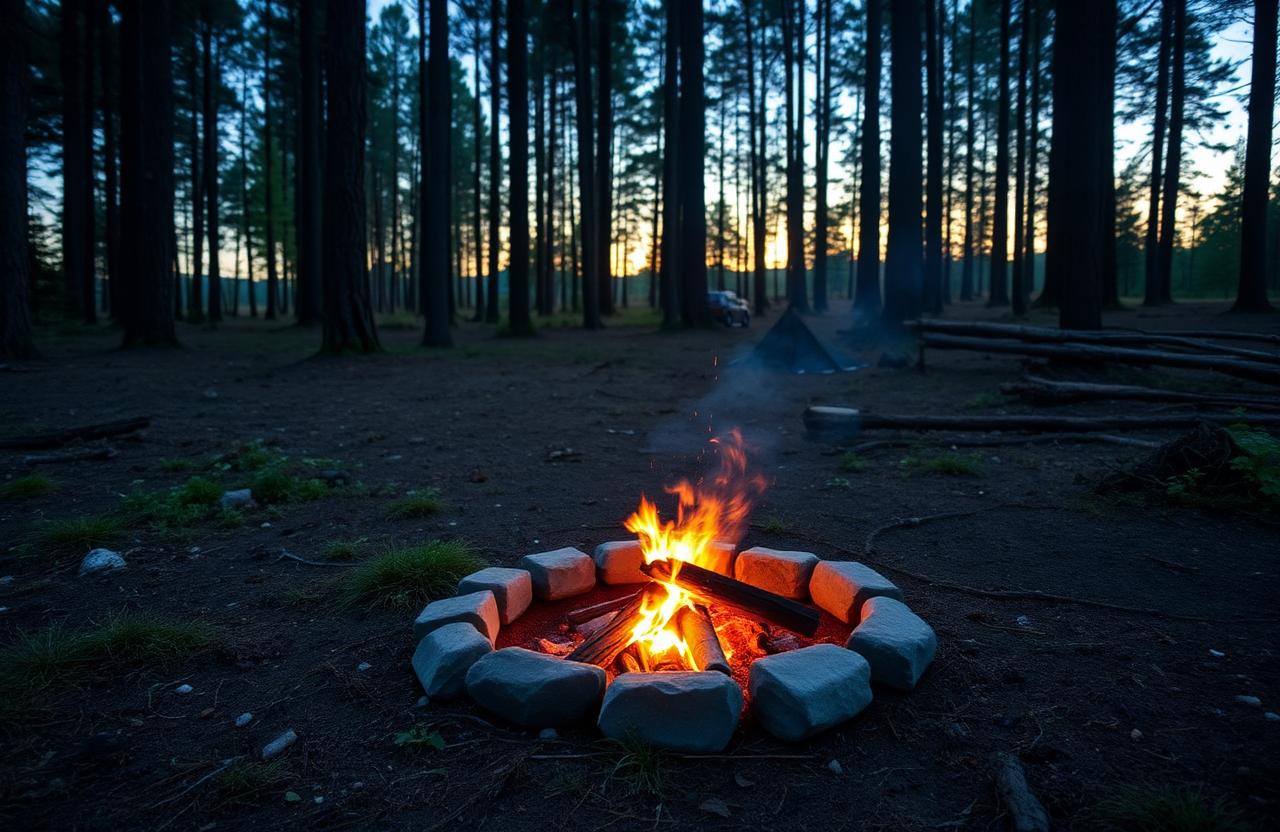
- Use existing fire rings wherever they exist — concentrating impact is the LNT priority.
- Clear a 3-meter radius of all combustible material down to mineral soil.
- Stay 5+ meters from tents, trees, low branches, and dry grass.
- Never build fires on peat, dry roots, or against rocks (smoke staining is permanent).
Fuel rules
Burn only dead-and-down wood you can break by hand. Never cut standing wood — alive or dead. Don't transport firewood between regions; it spreads pests like emerald ash borer that have killed hundreds of millions of trees.
The cold-out test
A fire is out when you can hold your bare hand in the ashes. Drown, stir, drown, stir again — wet ashes that 'look out' can re-ignite hours later.
The 7 Leave No Trace principles
- Plan ahead and prepare.
- Travel and camp on durable surfaces.
- Dispose of waste properly — pack out what you pack in.
- Leave what you find.
- Minimize campfire impacts (or use a stove instead).
- Respect wildlife — observe from a distance, store food securely.
- Be considerate of other visitors — keep noise down, yield on trails.
When in doubt, use a stove
A canister or liquid-fuel stove cooks faster, leaves no trace, works in fire bans, and is safer in windy conditions. Reserve fires for cold weather and morale.