Hiking Guides
How to Fit a Backpack: Torso Length, Hip Belt & Load Lifters
A perfectly packed bag still ruins your hike if it's the wrong size. This guide covers measuring your torso, choosing a frame size, dialing the hip belt, using load lifters, and the packing order that keeps weight on your hips — where it belongs.
Step 1 — Measure your torso (not your height)
Backpacks are sized by torso length, not height. Have a friend measure from your C7 vertebra (the bump at the base of your neck when you tilt your head forward) to the top of your iliac crest (the bony shelf of your hips). That distance — typically 38–53 cm — is your torso length.
Step 2 — Set the hip belt first
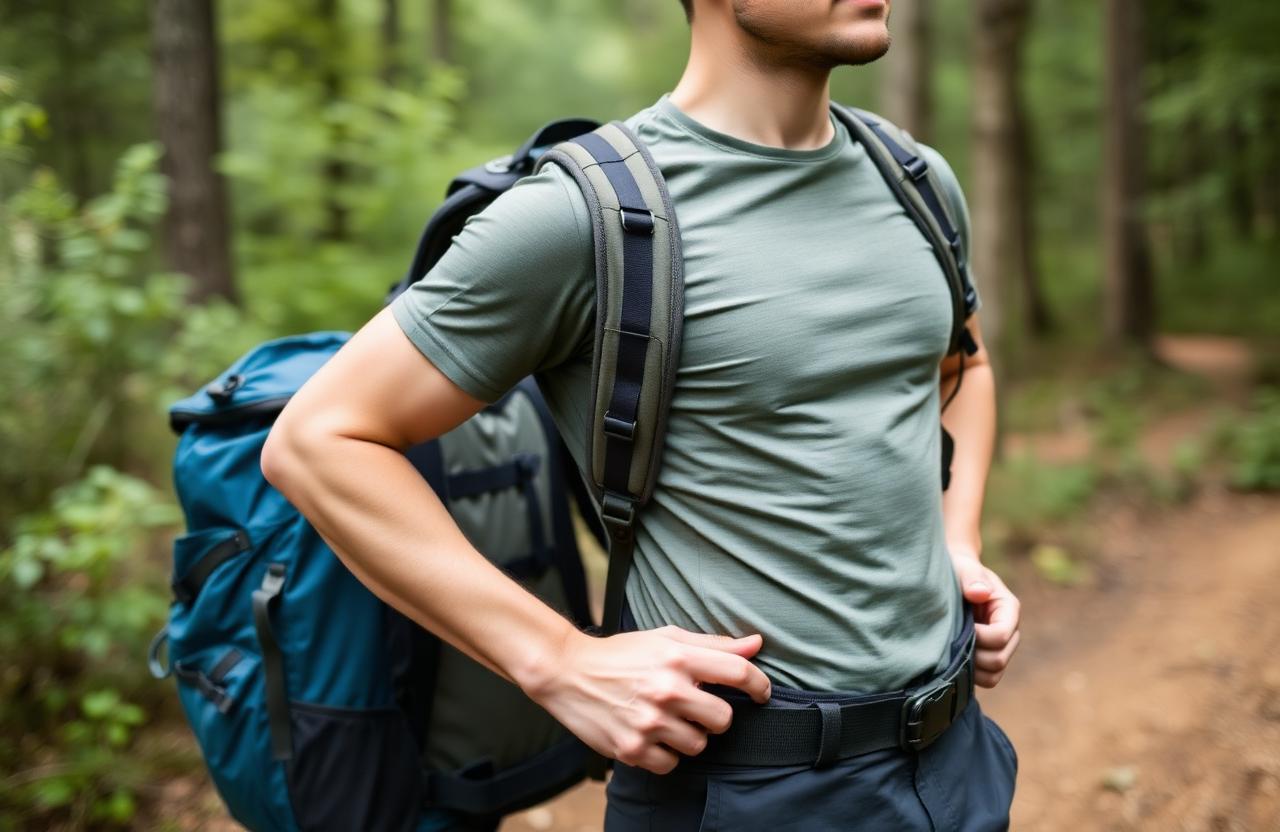
Loosen every strap. Lift the pack on with the hip belt centered on the top of your iliac crest, not your waist. Snug the hip belt — it should carry ~80% of the pack weight. The lumbar pad sits in the curve above your tailbone.
Step 3 — Shoulder straps and load lifters
Tighten the shoulder straps just enough to remove slack — they should not bear weight. The load lifter straps (running from the top of the shoulder strap to the pack body) should sit at a 30–45° angle. Pull them until the pack hugs your upper back without lifting the hip belt.
Sternum strap last
Buckle the sternum strap across your chest, just below the collarbone. Keep it loose enough that you can take a full breath.
Packing order matters
- Bottom — sleeping bag and night clothes (only opened at camp).
- Core / against back — heaviest items (food bag, water bladder, stove fuel).
- Outer — tent, jackets, mid-day snacks.
- Top lid — first aid, map, headlamp, sunscreen, anything you'll grab without unpacking.
- Hip belt pockets — phone, snacks, lip balm.
Don't exceed 20% of body weight
A loaded pack over 20% of your body weight increases injury risk dramatically. Lighten or split the load with trip partners.